
What a Portland winter actually does to an untreated deck
· Decks, Maintenance, Wet weather
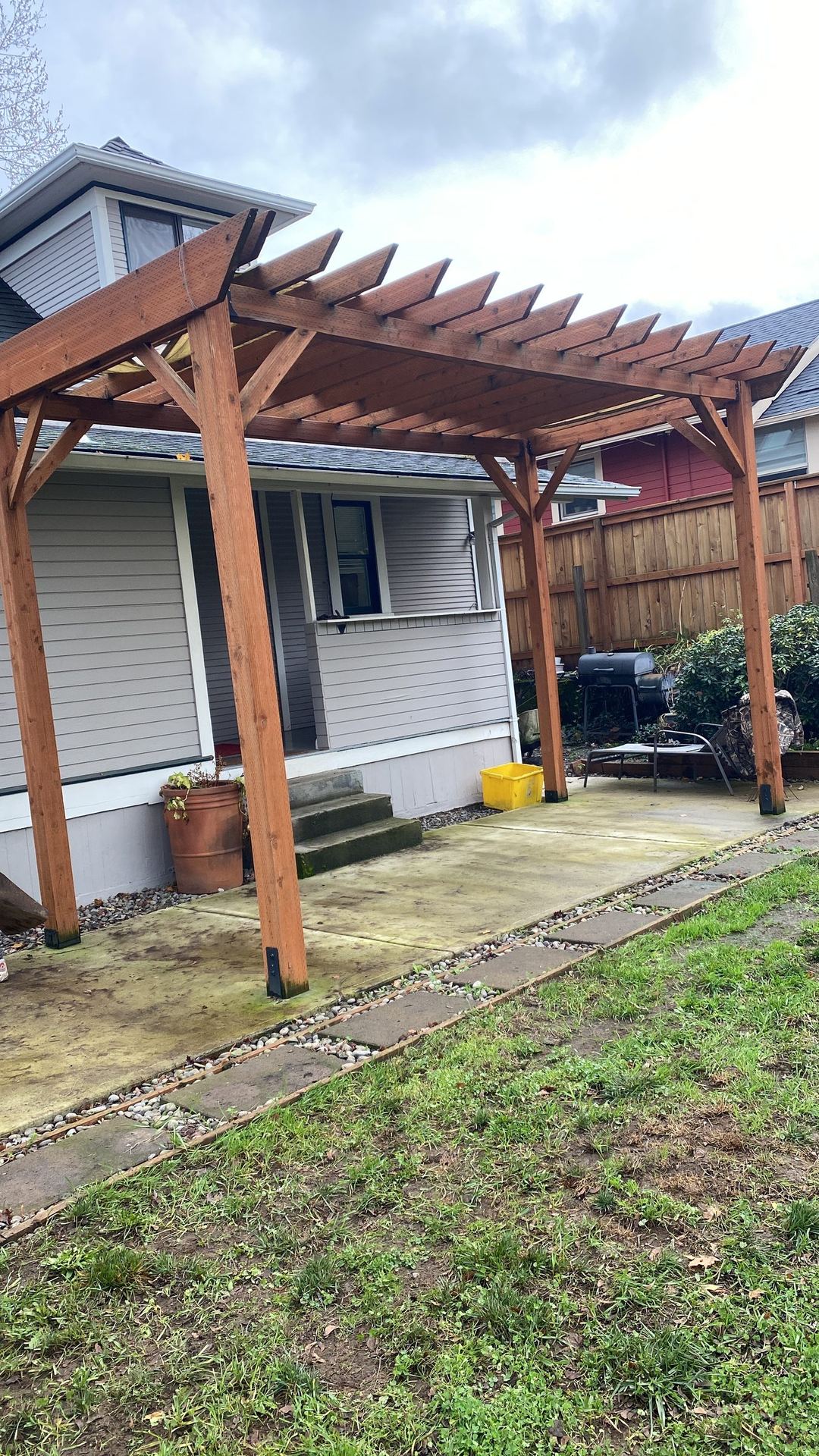
Every March the phone starts. A homeowner in Milwaukie steps on a board that gives a little underfoot. Somebody in Lake Oswego leans on a railing and feels it shift. By the time we pull up, the deck has spent six months getting rained on, and the damage has been quietly adding up since about Halloween.
Portland does not get winters that make the news. What it gets is persistence: rain most weeks from October into May, and long stretches where a shaded deck never fully dries. Untreated lumber takes the worst of it. Here is what we find when we start pulling boards.
What six months of wet does, step by step
It starts on the surface. Unsealed boards absorb water, swell, and dry unevenly during the few clear stretches in February and March. That cycle cups boards and opens checks along the grain. A cupped board holds a shallow pool instead of shedding water, and the cycle speeds up.
Then the fasteners. Cheap screws and old nails corrode in constantly damp wood, stain the board around them, and lose their grip. This is why a railing that felt solid in August wobbles in April.
The part nobody sees is the framing. Water sits where joists rest on beams and around posts at grade, and those joints stay wet longest because air cannot reach them. Rot almost always starts there, in the structure, not in the boards you walk on. By the time a board feels soft, the joist under it is usually worse.
Cedar and pressure-treated lumber are not magic
We build with the materials common here: pressure-treated framing, cedar decking and rails, composite surfaces. All of them fail eventually if water sits. Cedar heartwood resists rot well, but most boards include some sapwood, and sapwood rots about as fast as plain fir. Pressure-treated framing holds up except at every cut end and bored hole, where the treatment never reached. End grain drinks water like a straw, so when we repair a deck we seal cut ends before the board goes in. That is where the next failure starts.
The spots we check first
The same five spots fail over and over on a wet-climate deck. On a first walkthrough, this is the order we check:
- The ledger board where the deck meets the house, especially where siding was never flashed above it
- Posts at grade, and any post buried in a concrete pier that was poured flush with the soil
- Joist ends resting on the beam, the classic hidden rot pocket
- Stair stringers at the bottom, where they sit in the splash zone
- The north and shaded sides, and anywhere a planter or grill has sat for years
Shaded, treed lots toward Lake Oswego rot fastest. Full-sun lots in Clackamas dry between storms and fare better, but the ledger and posts still go eventually if they were never detailed right.
When we repair, and when we tell you to rebuild
If the framing is sound, we repair: new boards, rails, and stairs on the existing structure. That costs a fraction of a rebuild and buys many more years, especially if the surface gets sealed after. This is the bulk of our deck work every spring.
If the joists or posts are rotted, patching boards over them is throwing money away. We tell you plainly, show you the soft spots with an awl, and price the fix that actually fixes it. Structural framing and rebuild work is a bigger job, but it is the only honest answer when the bones are gone.
What actually protects a deck in this climate
No product replaces drainage and airflow. Keep the gaps between boards clear so water runs through, cut vegetation back so air moves underneath, and set planters on risers so the boards under them can dry.
Then seal the surface. A penetrating stain applied during a dry stretch in late summer keeps water out of the grain, which is where all of the above starts. Our exterior painting crew preps and stains decks the same way they prep siding: clean, dry, then coat. And if the stairs land in mud, a small concrete landing at the base keeps the stringers out of the splash zone for good.
Do those things and a deck here lasts decades. Skip them and you are calling somebody like us in five to seven years.
FAQ
Can I just seal over the moss and the dark stains?
No. Sealer over a dirty, damp surface traps moisture in the wood and peels within a season. The deck has to be cleaned, and then it has to dry for several days before anything goes on it. Around here that means scheduling the work for a dry stretch, usually late June through September.
How do I know if the framing is rotted without tearing boards off?
Press an awl or a flathead screwdriver into the joist tops where they sit on the beam, and into the posts at grade. Sound wood resists. Rotted wood lets the tool sink in with hand pressure. Also watch for boards that bounce when you walk, and railings that move: both point at structure, not surface.
Is composite decking worth it in Portland?
For the walking surface, often yes. Composite shrugs off the wet season and never needs staining, and on shaded lots it outlasts cedar by a wide margin. The framing under it is still wood, though, so the same ledger and post details decide how long the deck really lasts. At the walkthrough we talk through cost, look, and maintenance for each option.